
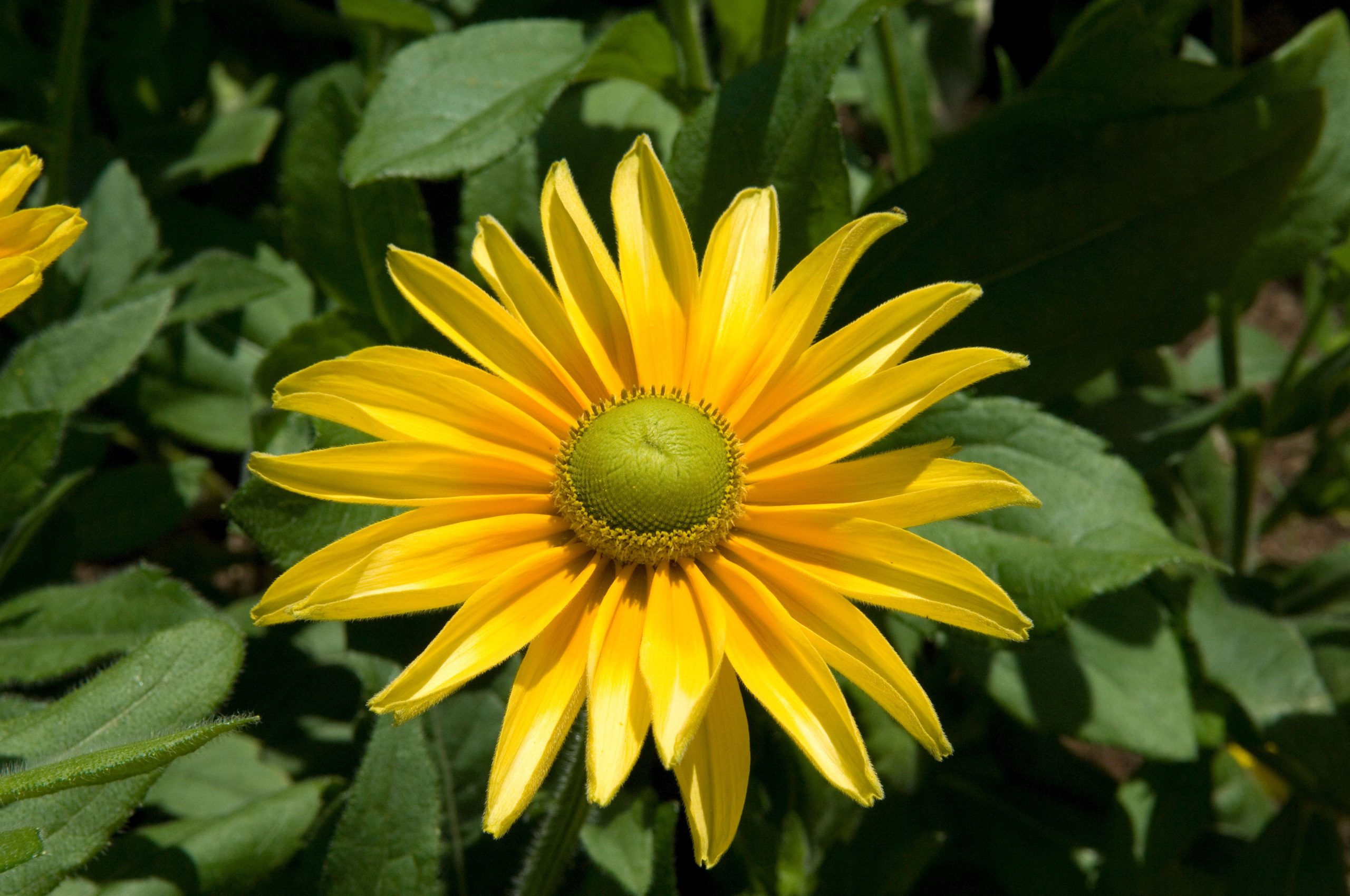
Few flowers say “late summer” quite like Rudbeckia Hirta Prairie Sun, with its velvety brown-black cone and sunburst of golden petals. It’s a favorite subject for botanical artists — bold, structurally satisfying, and endlessly forgiving of imperfect brushwork. But before you set up your specimen, it’s worth knowing that Rudbeckia can be a bit less forgiving on your skin.
I’m addressing this because I received a text from a botanical artist who had participated in my Hello Yellow online workshop to say that she had developed a serious reaction to her Rudebeckia specimen. She had never before had an allergic reaction to anything but had to see her doctor where she was diagnosed with hives, swelling in her hands, feet, and knees, in short, angioedema. The culprit was confirmed when she recovered enough to return to her painting only for the symptoms to immediately return.
Rudbeckia belongs to the daisy family, Asteraceae — a group notorious among gardeners and florists for causing contact dermatitis. The culprit is usually the fine hairs (trichomes) covering the stems and leaves, along with sap released when the plant is cut, bruised, or handled repeatedly. For some people, this triggers nothing more than mild, temporary itchiness. For others, especially with prolonged or repeated contact, it can lead to redness, small bumps, or a rash that develops hours after handling.
This matters more for botanical artists than for the average admirer, simply because of how we work. Painting from life often means keeping a specimen on the table for days, adjusting its position, misting it, snipping stems, and touching leaves and petals again and again as we study form and color. That repeated contact is exactly the kind of exposure that can provoke a reaction, even in people who’ve handled Asteraceae before without trouble — sensitivity can build up over time.
A few practical habits can help:
Wash your hands after handling your specimen, and especially before touching your face.
Avoid crushing or bruising stems and leaves more than necessary when arranging your subject.
Wear light gloves during setup and repositioning if you know you’re sensitive to plants in this family (it also includes chrysanthemums, ragweed, and yarrow).
Watch for delayed symptoms — reactions to Asteraceae sap sometimes appear a day or more after contact, not immediately.
If you notice irritation, let the area breathe and avoid re-exposure; persistent or spreading rashes are worth a doctor’s look.
None of this should scare you off Rudbeckia — it remains a wonderful, generous subject. It just deserves respect, a little awareness of what it can do, and a little care in how you handle it.