
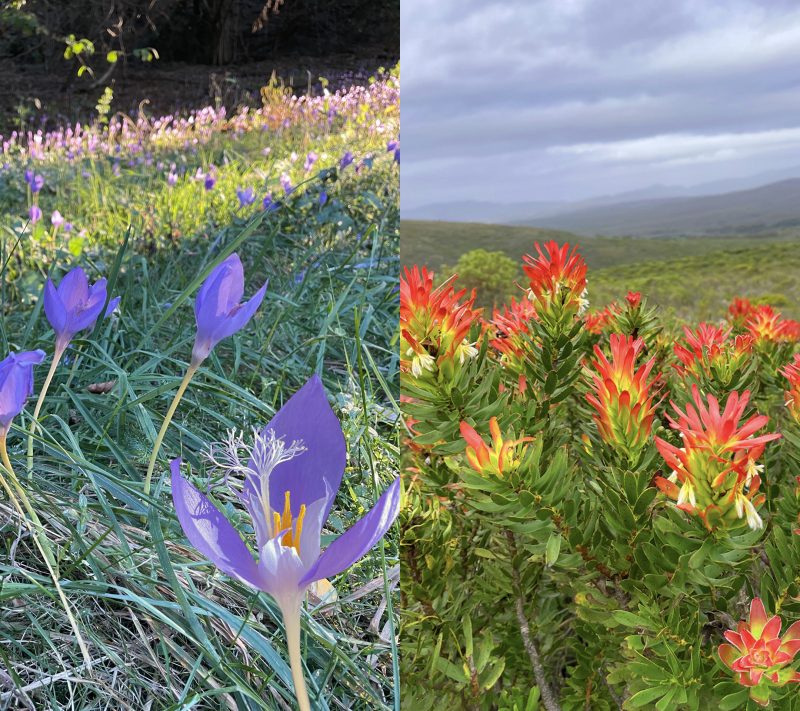
I’ve had the privilege of participating in two significant undertakings to document plants as part of well-organised conservation programs.
I’ve just returned from a second visit to Copșa Mare (home of the Transylvania School of Botanical Art) in Transylvania, Romania, and I’m about to visit Grootbos Private Nature Reserve in South Africa’s Western Cape for the second time. At Copșa Mare, the focus is on cataloguing all the plants (wildflowers in particular) in Transylvania’s pristine grasslands before modern industrial farming methods arrive in the area. At Grootbos, the focus is on identifying and documenting the fynbos for conservation.
Botanical art has always had a purpose beyond the purely aesthetic. For centuries, it has recorded plants with great accuracy and detail, helping botanists identify existing and new species, study their characteristics, and share knowledge worldwide. Today, as plant biodiversity comes under increasing pressure, botanical art continues to serve conservation.
Recording what we might otherwise lose
Accurate botanical illustration records a plant’s specific morphological features, from leaf arrangement to the details of its flowers, fruits, and seeds. This is especially valuable for informing the public of rare, threatened, or lesser-known species.
Historical botanical paintings may record plants that once populated a particular location. This helps botanists compare them with current species distributions and understand changes caused by human or environmental impact.
Encouraging closer observation
One of botanical art’s greatest strengths is the discipline of observation it requires. To draw or paint a plant accurately, you have to look beyond the eye-catching colour and general appearance to examine the individual characteristics.
This can reveal things you might otherwise miss: slight differences between species, a leaf’s condition, a flower’s structure. It’s very useful for deepening the artist’s appreciation of plant diversity and the need to protect it.
Increasing visibility of active conservation
Botanical art can also powerfully communicate the importance of conservation to a broader audience. A well-executed study can spark interest in a plant people may have never heard of, help them understand the plant’s unique features, or help them appreciate the intricacies of a species that is under threat of extinction.
Botanical art’s dual purpose, scientific accuracy and artistic appeal, can broaden awareness of conservation efforts when the public sees it at exhibitions, in publications, and in online galleries.
A meaningful role for today’s botanical artists
Botanical artists don’t need to be scientists to benefit plant conservation. They can work with botanical gardens and conservation bodies, document native plants, or help people see the botanical wealth in their own area.
Art alone won’t stop habitat destruction or reverse biodiversity loss. It can’t do that. But it can preserve knowledge, spark interest, and help people stay connected to the plant world.
Every plant you observe and record accurately reminds us of the staggering diversity around us and our obligation to ensure future generations can discover it too.
Learn more
You can learn more about Copse Marę’s Transylvania School of Botanical Art & Illustration and the Grootbos Private Nature Reserve by visiting their respective websites by clicking here: Copșa Mare and Grootbos.